
.png)


Is Mount Toubkal Dangerous? What You Need to Know Before You Climb
Mount Toubkal stands at 4,167m and is the highest peak in North Africa. You’ll often see it described as either “easy” or “dangerous”, which doesn’t really help anyone trying to decide whether to climb it.
The reality is a bit more straightforward than that. Toubkal is not a technical mountain, but it is still a serious environment. People get into difficulty here every season, and almost always for the same reasons. It’s not usually the mountain itself that causes issues, it’s how it’s approached.

Summit morning on Toubkal. Above the clouds.
Understanding the Real Risks on Mount Toubkal
The route itself isn’t complicated, but that can be misleading. The main risks come from weather, altitude, terrain and decision making, and these are what need to be managed properly.
Conditions in the Atlas can change quickly, especially higher up around the refuge and summit slopes. In summer, you’ll usually get stable days, but temperatures still drop sharply at night and early mornings can be cold enough to catch people out. In winter, it’s a completely different mountain. Snow, ice and strong winds are common, and we’ve had summit days where winds pushed well past safe limits and the decision was made to turn people around. You don’t always get the summit, and that’s part of doing it properly.
Altitude is one of the biggest factors. At over 4,000m, you don’t need to be an elite athlete to climb Toubkal, but you do need to respect the height. Headaches, nausea and fatigue are common if people move too quickly. The issue isn’t the mountain itself, it’s how quickly people try to gain height.
The terrain is not technical, but it is still mountain terrain. You’re dealing with loose rock, scree and long, steady climbs. In winter, that same ground becomes hard snow and ice, where slips can have consequences if you’re not properly equipped. It’s not difficult climbing, but it’s not a walk either.
Most problems come down to decision making. Pushing on when someone isn’t acclimatising well, ignoring early signs of altitude sickness, starting too fast and burning out, or heading up in poor conditions are all things we see regularly. Most issues could have been avoided earlier in the day with better pacing or a simple decision to stop and reassess.
Summer vs Winter: Two Very Different Experiences
Toubkal changes completely depending on the season, and understanding that is important when deciding when to go.
In summer, from late spring through to early autumn, the route is generally dry. Days are warm, nights are cold, and the main challenge is the steady climb and the altitude. It’s physically demanding, but conditions are usually predictable.
In winter, everything changes. Snow covers the route from around Chamarouch upwards, and the final approach to the refuge can already involve snow and ice depending on conditions. Higher up, crampons and proper winter movement become essential. Temperatures drop well below freezing and wind becomes a serious factor. You need the right kit, but more importantly, you need the judgement to know when to keep going and when to stop. We’ve seen days where the route looks fine from below, but conditions higher up tell a completely different story.
Avalanche Risk in Winter
Avalanche risk is a serious factor on Mount Toubkal during the winter months, and it’s often overlooked by people who assume the route is straightforward.
Heavy snowfall, wind loading and temperature changes can create unstable layers on the slopes above the main route, particularly higher up toward the summit. While the standard route is commonly used, that doesn’t remove the risk when conditions are right.
The 2026 season alone saw multiple avalanche incidents in the region, including three fatalities. That highlights how seriously winter conditions need to be treated here.
Understanding snow conditions, reading terrain and being willing to adjust plans or turn around is critical. On some days, the safest decision is simply not to go higher. Avalanche risk isn’t constant, but when it’s present, it’s one of the most serious hazards on the mountain.

Full winter conditions on the summit of Mount Toubkal.
No views, just wind, snow and a proper effort to get there.
What Actually Causes Problems on Mount Toubkal
Most issues on Toubkal come down to human factors rather than the mountain itself. People often arrive thinking it’s a quick, straightforward summit, and that’s where mistakes start.
Going too high too quickly without proper acclimatisation, underestimating the altitude, turning up with the wrong kit, or sticking rigidly to a plan when conditions change all increase risk. These are avoidable problems, but they happen every season.
The “Easy Mountain” Misconception
Toubkal is often described as “easy” because it doesn’t require ropes or technical climbing. That doesn’t make it easy.
You’re still climbing to over 4,000m, covering long days on your feet, dealing with changing conditions and managing how your body responds to altitude. We’ve had strong, fit people struggle simply because they underestimated what that combination feels like.
Choosing the Right Support on the Mountain
If you’re booking a very low-cost trip, it’s worth understanding how it’s being run. In some cases, the person leading the group may not be a fully certified mountain guide or have the experience to manage changing conditions.
In stable weather, that might not be an issue. But higher up the mountain, especially in winter, conditions can shift quickly. This is where experience matters. Knowing when to slow things down, change the plan or turn people around is what keeps a group safe.
On more basic trips, groups often rely on following established tracks or other teams already on the route. That works when everything is straightforward, but it offers little flexibility when conditions become more serious. Choosing the right support isn’t about making the climb easier, it’s about making sure it’s managed properly when it matters most.
How Risk Is Actually Reduced
There’s no way to remove risk completely, but it can be managed properly with the right approach.
Taking time to acclimatise properly makes a significant difference. Routes that include an extra day before heading higher allow your body to adjust and reduce the likelihood of altitude-related issues.
Pacing is another key factor. Most people start too fast. A steady pace, especially early on, is what gets people to the summit feeling strong rather than exhausted.
Experience and decision making are where the biggest differences show. Knowing when to push on and when to stop is what keeps people safe. We’ve turned groups around in high winds and used those days to focus on winter movement and skills instead. The summit is always secondary to getting everyone back down safely.


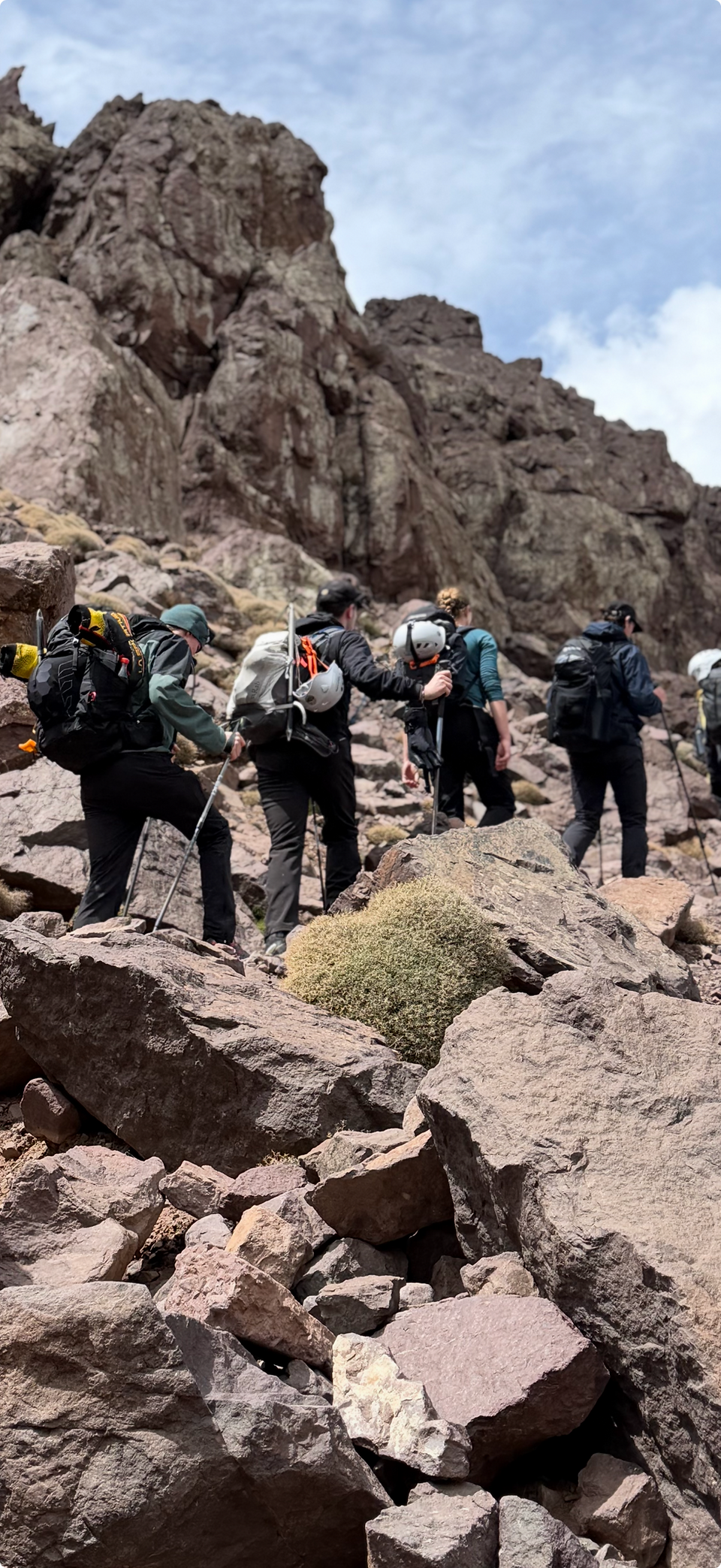
It's not just the summit. It's everything that leads up to it.
So, Is Mount Toubkal Dangerous?
It can be, but not because it’s extreme. It’s because it’s easy to underestimate.
With the right approach, good pacing, proper acclimatisation and experienced leadership, it’s a very achievable climb for most people with a decent level of fitness. Without that, small mistakes can build into bigger problems quickly.
On winter ascents in particular, preparation becomes even more important. We include a winter skills session before heading higher, where you learn how to use crampons and an ice axe, along with basic movement techniques on snow and ice. It’s not about turning people into mountaineers overnight, but giving you the confidence and understanding to move safely and handle the conditions you’ll encounter.
That combination of preparation and decision making is what makes the difference on the mountain.
Final Thoughts
Mount Toubkal sits in that space where it’s accessible, but still demands respect. If you treat it like a proper mountain, prepare well and stay flexible with decisions, it’s an incredible climb.
If you treat it as an easy box-ticking exercise, that’s when people come unstuck.
Climb Mount Toubkal the Right Way
If you’re considering climbing Mount Toubkal and want to approach it properly, you can view our upcoming expeditions and see how we structure them around acclimatisation, pacing and real on-the-ground decision making.


Comments