
.png)


Best Time to Climb Mount Toubkal: Month-by-Month Guide
Mount Toubkal (4,167m) is the highest peak in North Africa and the most prominent mountain in Morocco’s High Atlas. Despite its altitude, it is one of the most accessible 4,000-metre summits in the world and can be climbed throughout the year.
However, the experience on the mountain changes dramatically depending on the season. During summer the ascent is a straightforward high-altitude trek, while winter transforms the upper slopes into a snow-covered alpine climb requiring crampons and ice axes.
Understanding these seasonal differences is key when planning a Mount Toubkal expedition. Below we break down the conditions on the mountain throughout the year and explain which months are best suited to different types of climbers.

Winter ascent between Chamharouch and the Toubkal Refuge
Mount Toubkal Weather and Seasons
The High Atlas Mountains experience a climate heavily influenced by altitude. While the valleys around Imlil can feel warm and dry for much of the year, conditions higher on the mountain are often dramatically different.
Above roughly 2800 metres the environment becomes alpine, with colder temperatures, stronger winds and the possibility of snow even outside the winter months.
Broadly speaking, the climbing season can be divided into four periods:
• Winter (November – April) – Cold temperatures and snowfall create true alpine conditions.
• Spring (April – May) – A transitional period with melting snow and warming valleys.
• Summer (June – September) – Warm, dry trekking conditions with mostly snow-free routes.
• Autumn (October) – Stable weather and quieter trails before winter conditions return.
Each season offers a very different experience on the mountain.
If you’re deciding between seasons and like a comparison, you may like to take a look at our detailed guide Winter vs Summer Mount Toubkal.
Mount Toubkal in Winter (November – April)
Winter transforms Mount Toubkal into a completely different mountain. Snow covers the upper slopes and summit ridge, turning the ascent into a true alpine climb rather than a trekking route.
Temperatures can drop well below freezing at altitude, particularly during the night and on early morning summit pushes.
Climbers visiting during winter should expect:
• Snow-covered trails above the refuge
• Icy sections on the summit slopes
• Cold temperatures and strong winds at altitude
Climbing safely during winter requires appropriate mountaineering equipment and experience. Essential gear normally includes crampons, an ice axe and proper winter clothing.
For those prepared for the conditions, winter ascents offer a quiet and dramatic experience on the mountain, with far fewer trekkers on the trail.


Mount Toubkal in Spring (April – May)
Spring is a transitional period on Mount Toubkal. Snow still covers much of the upper mountain while the valleys begin to warm and vegetation returns to the landscape.
This creates a mix of terrain as you climb higher. Lower sections of the route may be dry while snow remains on the summit slopes.
Typical spring conditions include mixed snow and dry terrain, milder daytime temperatures and colder nights at altitude. Early in the season crampons and ice axes may still be required for the summit approach.
By late May the mountain often begins transitioning toward summer trekking conditions.
Spring offers a balance between the quiet atmosphere of winter and the easier terrain of summer.
Mount Toubkal in Summer (June – September)
Summer is the most popular time to climb Mount Toubkal. Weather is generally stable, the routes are snow-free and the ascent becomes a straightforward high-altitude trek.
During summer climbers can expect dry trails, warm temperatures in the valleys and cooler air on the summit slopes.
Because the climb does not usually require technical equipment during this season, it is often the best time for first-time trekkers attempting a 4,000-metre peak.
July and August tend to be the busiest months on the mountain.


Mount Toubkal in Autumn (October)
Autumn is often overlooked but can provide some of the best climbing conditions of the year.
The weather is typically stable with clear skies and crisp mountain air. Trails are usually dry and the crowds of summer have disappeared.
Climbers visiting during October can expect cooler temperatures than summer, quiet trails and excellent visibility across the High Atlas.
For many experienced trekkers, October is one of the most enjoyable months to climb Mount Toubkal.
Atlas Mountains &
Mt Toubkal
May - October
Join one of our small-group expeditions in the Atlas Mountains and climb the highest peak in North Africa. Our summer trips run from May to October using a progressive route designed for better acclimatisation and a stronger summit success rate.

Month-by-Month Conditions on Mount Toubkal
Typical conditions on Mount Toubkal vary throughout the year. While exact weather always depends on the season, the following overview provides a general guide to what climbers can expect month by month.
January
Deep winter conditions with significant snow cover and very cold temperatures at altitude. Crampons and ice axes are normally required.
February
Similar to January with snow-covered slopes and freezing summit temperatures. Conditions can begin to stabilise slightly toward the end of the month.
March
Winter conditions continue on the upper mountain. Snow remains deep and summit slopes often require full winter equipment.
April
A transitional period where lower trails begin drying while snow remains on higher sections of the mountain.
May
Snow melts rapidly as temperatures rise. Early May can still involve snow on summit slopes, while late May often sees improving trekking conditions.
June
Generally the beginning of summer trekking conditions with largely snow-free routes and warm daytime temperatures.
July
Peak summer season with stable weather and dry trails. This is one of the busiest months on Mount Toubkal.
August
Conditions are similar to July with warm valley temperatures and cooler air higher on the mountain.
September
Warm days continue but with fewer trekkers as the main summer season begins to wind down.
October
Often one of the best months to climb, with stable weather, clear skies and quieter trails.
November
Temperatures begin dropping and early snowfall returns to the summit slopes.
December
Winter conditions begin settling in again with increasing snow coverage and colder temperatures at altitude.

Mount Toubkal in winter and summer conditions
Best Months to Climb Mount Toubkal
The best time to climb Mount Toubkal depends on the type of experience you are looking for.
For most trekkers, June to September offers the easiest conditions. Trails are dry, weather is predictable and the ascent does not normally require technical equipment.
Those seeking quieter trails may prefer May or October when visitor numbers are lower but conditions are still favourable.
For climbers interested in winter mountaineering, November through April offers a completely different alpine experience with snow-covered terrain and the need for crampons and ice axes.
Planning Your Mount Toubkal Expedition
Although Mount Toubkal is considered one of the more accessible 4,000-metre peaks, it should not be underestimated. Altitude, weather changes and long summit days all require preparation.
Before attempting the climb it is important to build a basic level of endurance, bring appropriate clothing layers for changing temperatures and allow time for acclimatisation during the ascent.

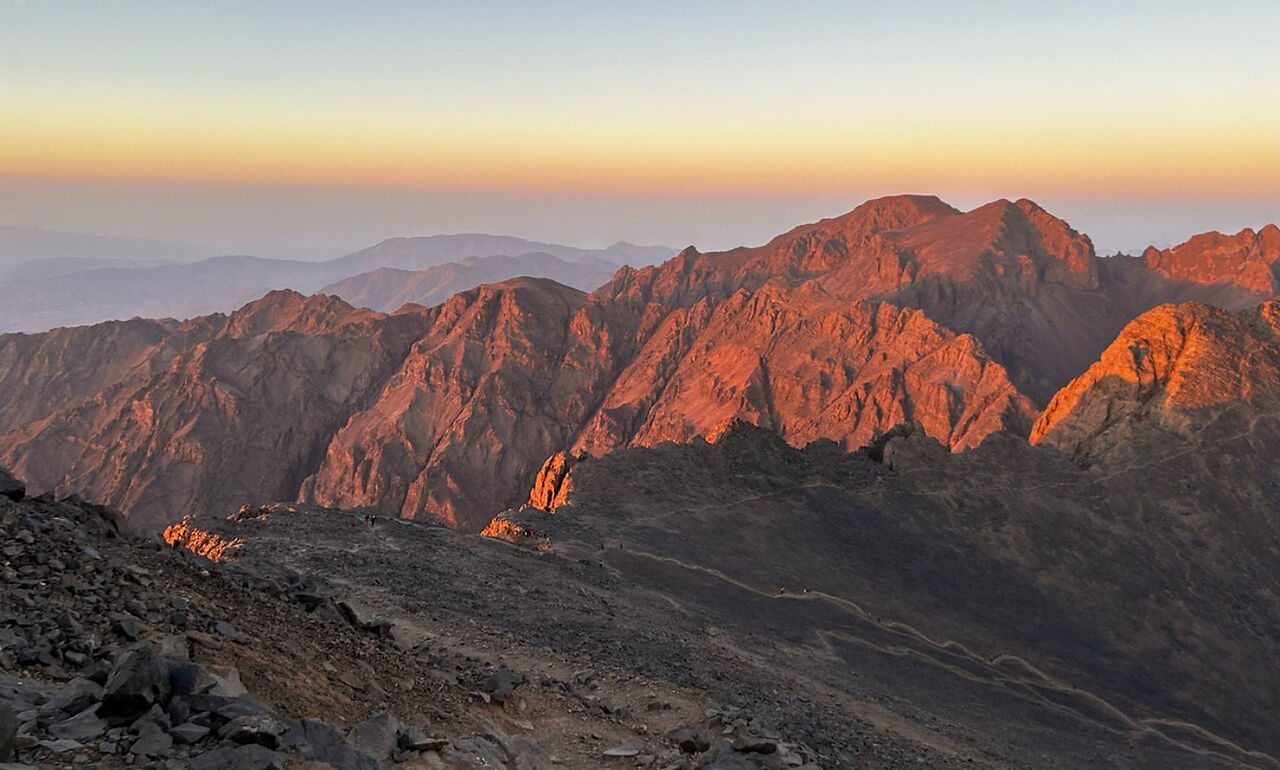
Sunrise from the the summit of Mount Toubkal, the highest mountain in North Africa
Ready to Climb Mount Toubkal?
Wild Axis Expeditions runs small-group trips to Mount Toubkal year-round, offering expert guidance whether you want a summer trek or a winter mountaineering challenge. Our experienced team knows the mountain intimately and prioritizes your safety and enjoyment.
Learn more about our expeditions and start planning your Mount Toubkal adventure today.


Comments