
.png)


How Hard Is Mount Toubkal Really? Difficulty, Fitness, Training & Climb Guide (2026)
Updated: Feb 23
Mount Toubkal is the highest peak in North Africa, rising dramatically above the Atlas Mountains of Morocco. It attracts adventurous travellers from around the world who want to experience its rugged beauty and rewarding summit.
If you are considering booking a guided expedition, you might be wondering: how hard is Mount Toubkal really? This guide explains what to expect, how to prepare, and why climbing with experienced support can make all the difference.
Mount Toubkal is widely considered a challenging but achievable trek for people with good fitness. The main difficulty comes from altitude, long walking days, and demanding summit conditions rather than technical climbing. In summer, it is a non-technical hike, while winter ascents require crampons, ice axe skills, and mountaineering experience. Most climbers complete the trek in 2–3 days with proper preparation and acclimatisation.

Gateway to the High Atlas - Toubkal National Park
🏔 Ready to Climb Mount Toubkal?
Experience North Africa’s highest peak with expert guidance, small groups, and full expedition support.
Wild Axis Expeditions delivers professionally guided Mount Toubkal climbs designed for safety, success, and an unforgettable summit experience.
✔ Experienced local mountain guides
✔ Small supportive groups
✔ Structured acclimatisation planning
✔ Full logistics handled for you
✔ High summit success rate
Understanding the Height and Location
Once you climb above 4,000 metres on Mount Toubkal, you’re firmly into high-altitude territory. The air is noticeably thinner, which means every breath delivers less oxygen to your body. You’ll feel it quickly, your breathing becomes heavier, your heart works harder, and even a steady walking pace can feel surprisingly demanding. Simple things take more effort than they would at lower elevations.
As your body adjusts, it’s completely normal to experience some effects of altitude. Headaches, poor sleep, loss of appetite, or general fatigue are common, especially if the ascent is too quick. This is the body’s natural response to reduced oxygen, and it’s why a steady pace and proper acclimatisation are so important. Pushing too hard, too fast rarely ends well in the mountains.
Physical performance also changes. You tire more easily, recover more slowly, and concentration can dip if you’re not properly adapted. That’s why experienced mountain teams focus on pacing, hydration, and paying close attention to how everyone is feeling as the altitude increases.
Mount Toubkal may not be a technical climb in summer conditions, but its height alone demands respect. Reaching the summit is far more about managing the altitude sensibly than it is about strength or speed.
Summer vs Winter Difficulty
The difficulty of Mount Toubkal changes a lot depending on the season. We class conditions as either summer or winter, but in reality there are also shoulder periods where the mountain can feel like a mix of both.
Summer
In summer, Toubkal is a high altitude trek rather than a technical climb. Trails are normally clear of snow and the route is straightforward to follow. Most of the challenge comes from the altitude and long steady ascent rather than the terrain itself.
You will feel the thinner air, especially near the summit, and the effort builds over consecutive days, but movement is simple and no technical equipment is usually needed. For most people with good fitness, this is the most accessible time to climb.
Winter
Winter changes the character of the mountain completely. Snow and ice cover much of the route, especially higher up, and progress becomes slower and more deliberate. Slopes that feel like normal walking in summer can require careful footwork in winter conditions.
You do not need full winter mountaineering experience, but you must be comfortable using crampons and an ice axe. Cold, wind and changing weather also make the environment more serious, with less margin for error.
Shoulder Seasons
Between the main seasons, usually in spring and late autumn, conditions can be mixed. Lower down may feel like summer while higher sections still hold snow. You might be trekking one moment and using winter equipment the next. Weather can also change quickly, so flexibility is important.
Choosing the Right Season
Summer is best for a physically demanding but straightforward high altitude trek. Winter offers a more alpine experience with snow, ice and a greater sense of challenge.
It simply comes down to the type of mountain experience you want.
Fitness Level Required
You don’t need to be an elite athlete, but you do need solid endurance and the ability to keep moving for long days at altitude.
You should be comfortable with:
• Walking uphill for 6 to 8 hours a day
• Carrying a small daypack
• Moving on rocky and uneven ground
• Managing effort in thin air
Good cardiovascular fitness and strong legs make a big difference. Most people prepare by hiking hills, using stairs, or doing regular endurance training in the months before the trip.
What Makes Mount Toubkal Challenging?
Altitude - At over 4,000 metres, the thinner air is the biggest challenge. Even simple movement feels harder, especially near the summit.
Terrain - The route is mostly straightforward but includes rocky paths, steep slopes, and loose ground, particularly on the final ascent.
Summit Day - The longest and toughest day. An early start, steep climbing, cold temperatures, and fatigue all come together.
Weather - Mountain weather changes quickly. Wind, cold, and sudden temperature drops can add to the difficulty.
Common Mistakes First-Time Trekkers Make
Starting too fast - Going too hard early on leads to exhaustion and increases altitude sickness risk.
Ignoring acclimatisation - Ascending too quickly is one of the main reasons people struggle on summit day.
Poor gear choices - Incorrect footwear or clothing makes the climb far harder than it needs to be.
Underestimating summit day - It is longer and more demanding than most expect.
Choosing the cheapest operator - Cutting costs can mean compromising on safety, experience, and proper expedition support.
How Guided Expeditions Make It Safer and More Achievable
Booking a guided Mount Toubkal expedition brings many advantages:
• Experienced local guides who know the mountain and conditions
• Small groups with close support
• Structured pacing and acclimatisation
• Full logistics handled for you
• Ongoing encouragement and safety monitoring
You focus on climbing. Everything else is taken care of.
Why Choose Wild Axis Expeditions?
Climbing at altitude requires experience, planning, and the right support team. Wild Axis Expeditions specialises in small-group mountain adventures designed for safety, success, and an exceptional expedition experience.
✔ Expert local licensed mountain guides
✔ Small group sizes for personalised support
✔ Structured acclimatisation planning
✔ Safety-focused expedition leadership
✔ Full logistics handled from start to finish
✔ Proven summit success rates
With the right preparation and experienced guidance, Mount Toubkal becomes a challenging but highly achievable goal.

Sunrise over the Atlas Mountains from the highest point in North Africa
Who Should Not Attempt Mount Toubkal
Toubkal is not suitable for everyone. You should reconsider if you:
• Have serious heart or lung conditions
• Are pregnant
• Have very low fitness or no hiking experience
• Are unwilling to acclimatise properly
• Have severe balance or height issues
• Are not prepared for basic mountain conditions
If any of these apply, it is safer to enjoy lower altitude treks in Morocco or join a guided trek with a flexible itinerary.
How to Prepare Physically
Preparing for the Mount Toubkal trek Morocco involves building endurance, strength, and altitude awareness:
• Regular cardio training several times a week
• Hill walking or stair climbing with a pack
• Leg and core strength work
• Flexibility and balance training
• Practice hikes with elevation gain
• Learn the basics of altitude sickness
Consistency matters more than intensity..
Best Time to Climb Mount Toubkal
The most stable conditions are usually from May to October, with clear trails and warmer temperatures. Early autumn often has cooler air and fewer people.
Winter brings snow and ice, turning the climb into a more alpine experience that requires winter equipment and proper guidance.
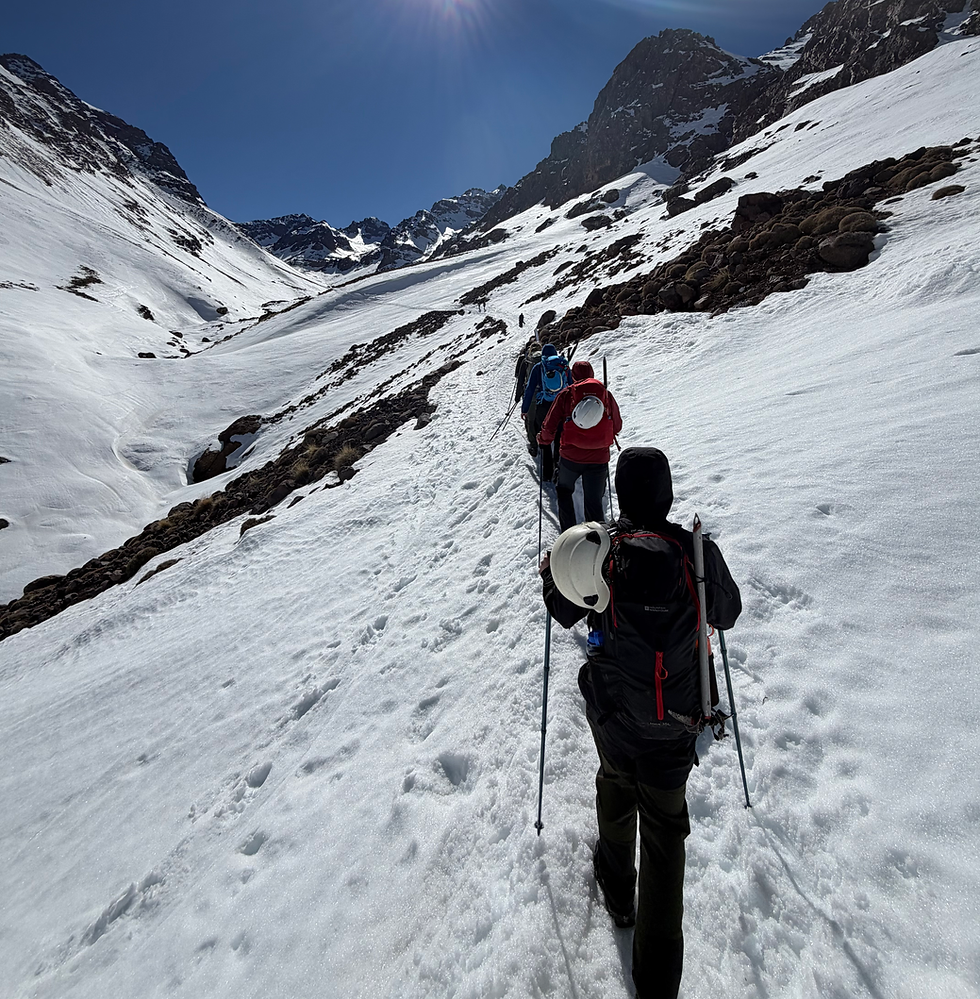
Climbers at 2900m ascending towards the Toubkal Base Camp.
Mount Toubkal FAQ
How long does it take to climb Mount Toubkal?
Most guided climbs take 2–3 days, including an overnight stay at the mountain refuge.
Is Mount Toubkal suitable for beginners?
Yes in summer, if you have good fitness and hiking experience. Winter climbs require mountaineering skills fully taught and supported by Wild Axis Expeditions guides throughout the climb.
Do you need crampons to climb Mount Toubkal?
Yes in winter when snow and ice cover higher sections.
What is the hardest part of the climb?
Summit day is the most demanding due to altitude, steep terrain, and long hiking hours.
Can you climb Mount Toubkal without a guide?
Moroccan regulations require registered mountain guides for the summit route.
Final Thoughts
Mount Toubkal is a demanding but very achievable climb for anyone with good fitness and proper preparation. Altitude, terrain, and summit day require respect, but with the right support it is well within reach.
A guided expedition gives you the best chance of success while keeping the experience safe and enjoyable.
If you are ready for the challenge, train well, prepare properly, and take the first step toward standing on the highest peak in North Africa.
Ready to stand on the summit of North Africa’s highest peak?
Climb Mount Toubkal with expert local guides, small supportive groups, and full expedition planning from start to finish.


Comments