
.png)


First Time Trekking Expedition: The Ultimate How-To Guide for Beginners
Updated: Jul 11
What if the most gruelling part of your first mountain summit isn't the vertical gain, but the mental weight of being unprepared? It's one thing to enjoy a brisk Sunday stroll through the local hills; it's quite another to commit to a multi-day journey where the terrain dictates the rules. You might worry about being the slowest person in the group or feel overwhelmed by a technical kit list that looks more like a NASA manifesto than a packing guide. These anxieties are common, but they shouldn't stop you from reaching the ridge.
We're here to bridge the gap between casual walker and capable adventurer. This guide provides the professional blueprint you need to conquer your first time trekking expedition with confidence. We'll strip away the confusion surrounding altitude and gear, replacing it with veteran-led insights on physical preparation and mental grit. From selecting a beginner-friendly route to mastering your layering system, you're about to learn how to move with purpose and safety in the world's most extraordinary environments.
Table of Contents
What Defines a Trekking Expedition vs. a Standard Walking Holiday?
Many people mistake a trekking expedition for a standard walking holiday. The fundamental difference lies in the environment, the commitment, and the intensity of the experience. A standard walking holiday often prioritises leisure, staying in comfortable hotels and following well-trodden paths with minimal gear. In contrast, an expedition is a tactical operation. It is a multi-day journey into remote, often high-altitude wilderness where the objective is the journey itself, not just the destination. To understand What Defines a Trekking Expedition, we must recognise the shift from "holiday" to "challenge".
This transition requires a complete change in your psychological approach. On a day hike, you know a hot shower and a bed wait for you at sunset. During a first time trekking expedition, you commit to the elements for days or weeks. You swap luxury for resilience. Team dynamics and grit become more important than Egyptian cotton or hotel buffets. Professional leadership is the glue that holds these missions together. A veteran guide doesn't just navigate; they manage safety, monitor health in thin air, and facilitate authentic cultural immersion in regions that standard tourists simply cannot reach.
The Expedition Mindset: Embracing the Extraordinary
Stepping out of your comfort zone is the price of admission for true adventure. Physical discomfort, whether it is a cold morning in a high camp or the burn of a steep ascent, is not a sign that something is wrong; it is part of the reward. This mindset allows you to access "insider" experiences that are closed to the casual traveller. Whether you are traversing the limestone peaks of Montenegro: Rivers & Ridges or exploring the dense, remote jungles of Northern Laos, the internal shift is the same. The expedition mindset is a blend of patience, grit, and curiosity.
Small Group Dynamics: Why Your Team Matters
Preparing for your first time trekking expedition can feel like a solitary task, but the reality of the trail is collective. We utilise small-group structures because they offer the agility and safety required in the wild. Shared challenges, from navigating a mountain pass to enduring a sudden weather shift, create lasting bonds amongst strangers. A veteran-led approach ensures that group cohesion remains high even when energy levels drop. This professional oversight manages the pace and monitors the morale of the team, ensuring everyone rises to the challenge together whilst maintaining a safe environment in unpredictable terrain
Choosing Your First Peak: Toubkal, Kilimanjaro, or Beyond?
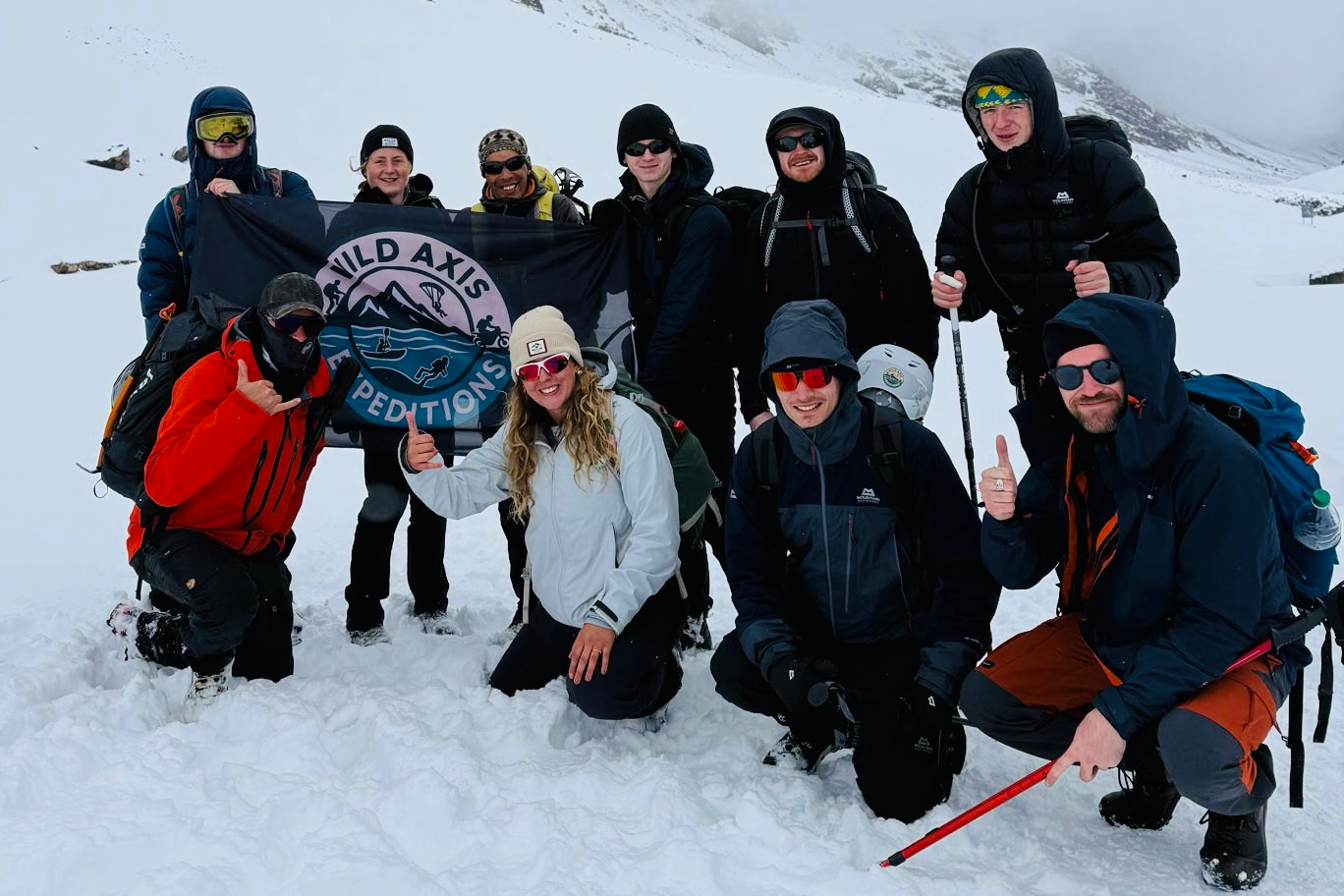
Selecting the right objective for your first time trekking expedition is a tactical decision that requires more than just looking at a summit altitude. You must balance your current physical endurance against the technical requirements of the terrain. For most beginners, the goal is to find a peak that offers a significant challenge without requiring advanced mountaineering skills like ice axe arrests or technical rope work. Success in the mountains is built on choosing a peak that matches your level of preparation whilst providing enough of a "stretch" to feel like a true achievement.
High-Altitude Acclimatisation for Beginners
In the high mountains, speed is your enemy. The "pole pole" (slowly, slowly) philosophy is the cornerstone of high-altitude success. Your body needs time to adapt to decreasing oxygen levels. Choosing a route with a superior acclimatisation profile, such as the Lemosho Route on Kilimanjaro, significantly increases your chances of reaching the summit. Understanding the physiological demands is vital; you can learn more about Training for Expedition Success to prepare your body for the rigours of thin air. Recognising early signs of altitude sickness, like persistent headaches or loss of appetite, is a skill every expedition leader prioritises to keep the team moving safely.
Comparing Iconic First-Time Expeditions
Mount Toubkal in Morocco is often the ideal starting point for those new to the high mountains. It's a 4,167-metre peak that can be conquered in a long weekend, yet it offers a rugged, authentic experience in the heart of the Atlas Mountains. Whilst summer treks are accessible to any fit walker, a Mount Toubkal winter climb introduces beginners to the basics of winter movement under expert supervision. It's a perfect testing ground for your gear and your grit.
Mount Kilimanjaro remains the ultimate bucket-list objective for a first time trekking expedition. It requires a longer time commitment and greater mental resilience than the Atlas Mountains. We recommend the Machame Route for those seeking varied scenery and a "climb high, sleep low" strategy that aids adaptation. If altitude isn't your primary goal, consider Montenegro: Rivers & Ridges. This route focuses on rugged terrain and technical hiking at lower elevations, making it a perfect alternative for building mountain confidence without the risks of extreme altitude.
Before you commit to a specific peak, review our full range of mountain expeditions to see which environment best suits your current goals.
Tactical Preparation: Training for Expedition Success
Conditioning your body for a first time trekking expedition requires a shift from general fitness to functional mountain strength. Whilst a casual jog or a gym session builds cardiovascular health, it doesn't prepare your joints and muscles for eight hours of steep descent on loose scree. We focus on building the "Expedition Engine" by prioritising aerobic capacity and muscular endurance. The "Time on Feet" (TOF) principle is your most valuable training tool. This means swapping short, high-intensity runs for long, slow walks that mimic the sustained effort of a mountain day. Train for the duration of the trek, not the speed of the summit.
Mental resilience is just as critical as physical power. The "Summit Push" often begins in the dark, under freezing conditions, when your body is screaming for rest. You train your brain by pushing through the final hour of a long training walk or by staying disciplined with your kit organisation when you're tired. Local guide-led expeditions offer an advantage here; your leaders provide on-the-ground coaching, teaching you how to manage your pace and mindset in real-time. This professional oversight ensures you don't burn out before the final ridge.
Terrain-Specific Training Strategies
To succeed on peaks like Mount Toubkal, you must mimic mountain conditions during your preparation. If you don't have access to hills, use stairs or a treadmill on a high incline whilst wearing a weighted rucksack. Start with 5kg and gradually increase to your expected trek weight. Breaking in your footwear is a non-negotiable rule. Blisters are the most common reason for expedition failure, so ensure your boots have covered at least 50 miles of varied terrain before you arrive at the trailhead. For a solid foundation, consult this beginner's guide to hiking to ensure your basic safety protocols are second nature.
A standard 12-week training outline for beginners includes:
Weeks 1-4: Build an aerobic base with 3-4 walks per week, reaching 2 hours in duration.
Weeks 5-8: Introduce functional strength (squats, lunges) and hill repeats with a 5kg pack.
Weeks 9-11: Peak volume. Back-to-back long walks (4-6 hours) with a 10kg pack to test endurance.
Week 12: Taper. Reduce volume by 60% to allow muscles to recover for the expedition.
Nutrition and Hydration Discipline
Fueling for a first time trekking expedition is about consistency, not volume. You need a steady stream of slow-release energy to avoid the afternoon slump. Prioritise complex carbohydrates at breakfast and carry high-energy trail snacks like nuts, dried fruit, and oat bars. Hydration at altitude is often overlooked. The air is drier and your breathing rate increases, meaning you lose fluid much faster than at sea level. Aim to drink 3-4 litres of water daily, supplemented with electrolytes to maintain your mineral balance. Managing these energy behaviours is the difference between a strong finish and a miserable descent.
Essential Kit: Mastering the Multi-Climate Layering System
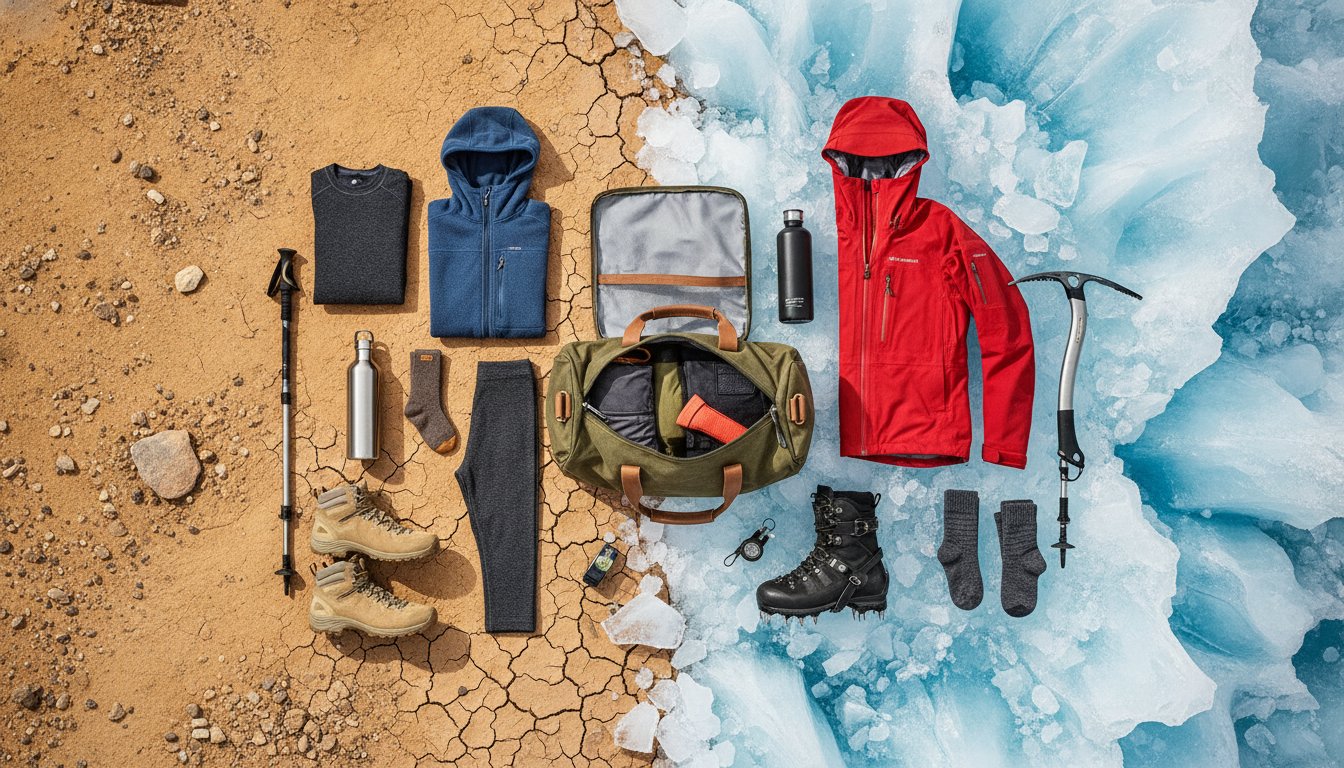
Gear selection for a first time trekking expedition is a balance of tactical necessity and weight management. You aren't just packing clothes; you're building a mobile life-support system. The most common mistake beginners make is over-packing low-quality items. Instead, invest in a few high-performance pieces that serve multiple purposes. Quality gear performs better under pressure and reduces the physical toll of a heavy pack. To understand the full scope of what you need, review our multi-climate expedition kit list.
The three-layer system is the industry standard for mountain safety. Your base layer must be synthetic or merino wool to wick moisture away from the skin. The mid layer provides insulation, typically a fleece or a down jacket, to trap body heat. Finally, the outer shell serves as a breathable, waterproof barrier against wind and precipitation. This modular approach allows you to regulate your temperature quickly as you move from humid valleys to frozen ridges. Mastering this system is vital for maintaining your energy and focus in volatile environments.
Boots, rucksacks, and sleeping bags are your "Big Three". These items dictate your comfort and recovery levels. A poorly fitted rucksack will compromise your posture and increase fatigue, whilst a sleeping bag with an inadequate comfort rating will leave you too exhausted for the summit push. We recommend prioritising these three investments above all else to ensure your first experience in the wild is defined by the view, not by avoidable physical strain.
Footwear: Your Most Important Investment
Choosing the right boot depends on your objective. For summer treks in the Atlas Mountains, a B1 boot offers the flexibility needed for long trail days. However, a Mount Toubkal winter climb requires a stiffer B2 boot to support crampons on ice and snow. High-quality wool socks are essential for moisture management; they prevent the dampness that leads to blisters. When lacing, use a "surgeon’s knot" to lock your heel in place during steep descents. This prevents your toes from hitting the front of the boot and saves your nails from bruising.
Technical Accessories You Shouldn’t Overlook
Walking poles are not optional for beginners. They reduce the impact on your knees by up to 25% during long descents and provide stability on uneven ground. You also need a reliable head torch with at least 300 lumens and spare batteries for the pre-dawn summit start. Finally, use a dry bag system to organise your kit. Keeping your spare layers in colour-coded, waterproof bags ensures you can find what you need in a dark tent whilst keeping everything bone-dry regardless of the weather. Ready to test your gear in the wild? Explore our full range of mountain-ready expeditions to find your next objective.
The Wild Axis Approach: From First-Timer to Expedition Trekker
Completing your first time trekking expedition is a milestone that transforms your perspective on what is physically possible. At Wild Axis, we specialise in bridging the gap between raw, remote adventure and professional safety. Our veteran-owned background means we apply military-grade precision to every logistical detail. Whilst we handle the complex planning, transport, and mountain support, you remain responsible for your personal preparation and essential admin. This includes securing your own travel insurance, which is a non-negotiable requirement for any high-altitude mission.
Success on the mountain is rarely a solo effort. We prioritise local guides because they are the true masters of their terrain. Their presence ensures authentic cultural immersion and provides the technical "insider" knowledge required for a safe summit. Once you've mastered your first peak, the journey doesn't have to end. Many of our trekkers transition from the vertical challenges of the Atlas Mountains and Mt Toubkal to the endurance-testing heat of the Atlas to Sahara expedition. This progression allows you to build a diverse portfolio of mountain and desert skills under consistent, expert leadership.
Authentic Challenges, Managed Risks
We don't believe in sanitised travel. An expedition should feel rugged and demanding, but it must never be reckless. Our approach centres on managed risk. By keeping our groups small, we provide personalised coaching on the trail, helping you refine your movement and breathing techniques in real-time. This intimate setting allows our leaders to monitor team health closely, ensuring that every first time trekking expedition is as safe as it is exhilarating. You get the grit of a true wilderness experience with the safety net of professional expertise.
The Final Briefing: Your Path to the Peak
Choosing a reputable UK operator is the most important decision you'll make before you even lace your boots. Look for a team that prioritises transparent communication and rigorous safety standards. The satisfaction of standing on a summit you've worked months to reach is an incomparable feeling, and for most, it's addictive. Your first expedition is rarely your last; it's simply the foundation for a lifetime of discovery in the world's most extraordinary places. Don't let hesitation hold you back from the ridge line. Join a small group adventure expedition and start your journey to the summit today.
Command the Ridge: Your Journey Begins Now
Mastering a first time trekking expedition is about more than physical fitness; it is a tactical evolution of your mindset and preparation. You now understand that success in the high mountains relies on a disciplined layering system, functional conditioning, and the resilience to push through the pre-dawn cold. By choosing an introductory peak that matches your current capability, you set the foundation for a lifetime of extraordinary discovery. The transition from casual walker to capable adventurer is demanding, but the reward is found in the silence of the summit.
We bridge the gap between your ambition and the summit. As a veteran-owned and operated team, we prioritise precision planning and safety-first leadership. Our small-group focus ensures authentic immersion whilst our expert local guides provide the cultural and technical depth required for a successful mission. You don't have to navigate these complexities alone; you only need the grit to take the first step.
Book your first veteran-led trekking expedition with Wild Axis and secure your place on the next ridge line. The world's most extraordinary environments are waiting. It is time to rise to the challenge.
Frequently Asked Questions
Is a trekking expedition suitable for someone with no mountain experience?
Yes, many trekking expeditions are specifically designed for those with no prior mountain experience. Non-technical peaks, such as Mount Toubkal in the summer, require physical endurance and grit rather than specialised climbing skills. Provided you choose a route led by professional guides, you can safely navigate high-altitude environments whilst learning the fundamentals of mountain movement and camp life in real-time.
How fit do I actually need to be for my first trekking expedition?
You need a solid baseline of cardiovascular endurance and the functional strength to walk for six to eight hours daily on uneven terrain. Specifically, you should be comfortable carrying a 10kg daypack for several consecutive days. If you can complete a full day of hill walking in the UK without significant distress, you possess the foundation required to begin a targeted expedition training programme.
What is the best "introductory" mountain for a first-time trekker?
Mount Toubkal in Morocco is the premier choice for beginners seeking a 4,000-metre summit. It offers a rugged, high-altitude experience without technical complexity. For those wanting a longer, bucket-list challenge, Mount Kilimanjaro is an excellent option. Routes like the Machame or Lemosho paths are specifically structured to aid acclimatisation, making them highly accessible to fit individuals who are new to the mountains.
Do I need to buy all my gear, or can I hire technical equipment?
You should invest in your own hiking boots and a rucksack to ensure a perfect, broken-in fit, but you can hire technical equipment. Items such as crampons, ice axes, or high-altitude down jackets are often available to rent at the destination or from specialist UK providers. This is a tactical way to manage costs during your first time trekking expedition without compromising on the quality of your kit.
How do I manage altitude sickness as a beginner?
Managing altitude is a matter of discipline, prioritising a slow pace and aggressive hydration. You should aim to drink four litres of water daily and follow the "pole pole" philosophy of slow, consistent movement. Professional guides monitor your health daily, checking for signs of Acute Mountain Sickness (AMS) and ensuring the itinerary allows for "climbing high and sleeping low" to facilitate natural acclimatisation.
What happens if I cannot keep up with the rest of the group?
Expeditions are not races, and professional teams always move at the pace of the slowest member. Guides are trained to manage group dynamics and ensure that no one feels pressured to overexert themselves. Moving at a steady, manageable pace is actually a superior strategy for success, as it conserves energy and allows your body more time to adapt to the decreasing oxygen levels.
Can I go on a trekking expedition as a solo traveller?
Absolutely, solo travellers frequently join our small-group expeditions to share the journey with like-minded adventurers. It is an excellent way to access remote wilderness areas whilst benefiting from the safety and social cohesion of a guided team. You get the independence of a solo trip without the logistical burden of navigating unknown terrain or organising complex mountain transport alone.
What is the difference between a guided and unguided trekking expedition?
Guided expeditions provide a safety-first framework that includes expert navigation, medical support, and logistical management of food and equipment. An unguided trek requires you to be entirely self-sufficient in unpredictable environments, which is rarely advisable for a first time trekking expedition. Professional leadership allows you to focus on the physical challenge whilst experts manage the underlying risks and cultural nuances of the region.


Comments